
South Africa's Retail Revolution
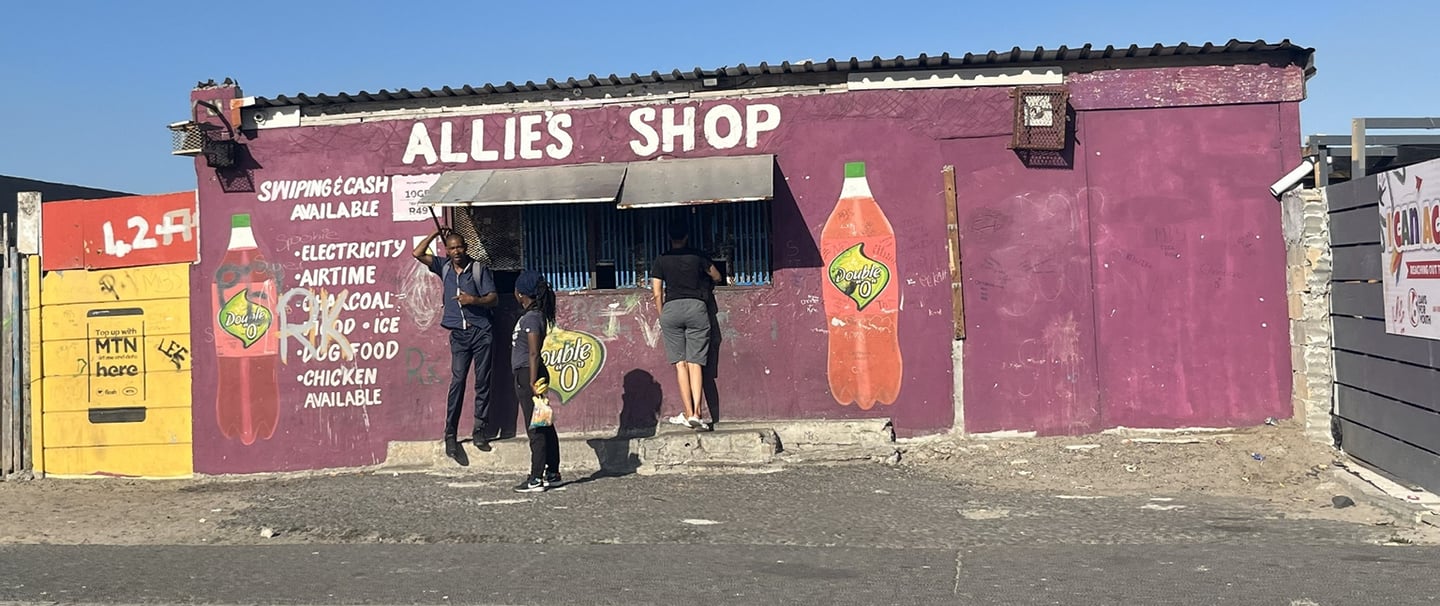
South Africa's retail sector is undergoing its most significant transformation since the end of apartheid. After three decades of suburban mall expansion that created 23.4 million m² of shopping space (MSCI Real Estate, 2024), the industry has reached saturation. The next frontier lies in townships—home to 21 million consumers and a R100 billion informal economy (FNB Township Economy Report, 2024) that formal retail has systematically excluded.
THE OPPORTUNITY
South Africa's 500+ townships represent 40% of the national urban population but account for less than 15% of formal retail gross leasable area. This geographic paradox is resolving through three converging forces:
Market Saturation: Mall space per capita stabilized at 0.43m²/1,000 (MSCI 2024). Load-shedding added 15-30% to energy costs (Property Sector Council, 2024).
Township Economic Power: R100 billion informal economy (FNB, 2024), 100,000-130,000 spaza shops at R1.5-2M turnover each (RogerWilco, 2021).
Digital Integration: Sixty60 hit 5.2M downloads, R19bn sales by 2024 (Shoprite, 2024).
KEY FINDINGS
Micro-stores (800-2,000m²) deliver 18-22% ROI vs 12-15% suburban through lower capex, higher velocity.
Integration beats displacement: spaza-to-franchisee conversions, taxi rank logistics hubs.
Energy independence mandatory: solar+battery+generator = 20-30% capex premium but eliminates vulnerability.
Energy independence mandatory: solar+battery+generator = 20-30% capex premium but eliminates vulnerability.
SA's infrastructure enables hybrid models unviable in Nigeria/Ethiopia.
STRATEGIC IMPERATIVES
For retailers, developers, investors:
• Deploy 800-2,000m² micro-formats in high-density townships with taxi connectivity.
• Build energy independence day one: solar+battery+backup non-negotiable.
• Engage communities pre-construction: local boards, 70%+ local employment.
• Accept different economics: higher security/logistics, lower land, superior 18-22% IRR.
• Digital enablement: WhatsApp ordering, cash-on-delivery, community pickups.
THE OUTLOOK
2025-2030: 15-20% projected CAGR, formal retail penetration from <15% to 25-30%. R25-30 billion opportunity. Winners master formal-informal, digital-physical convergence.
The mall era promised aspiration. The township era must deliver inclusion. With formal retail penetration below 15% and attractive returns (IRR 21-27% vs suburban 12-15%), townships markets represent South Africa’s last high-growth retail frontier.
For thirty years, South Africa's retail story was written in the polished corridors of suburban shopping malls. From Sandton City to the V&A Waterfront, these cathedrals of consumption symbolised the promise of post-apartheid prosperity—air-conditioned islands of modernity where aspiration met transaction. By 2016, the country had built one of the world's most sophisticated retail infrastructures: 23.4 million square metres (MSCI Real Estate, 2024) of shopping centre space, ranking eighth globally, ahead of France and Australia.
But beneath this gleaming surface lay a geographic paradox. While developers poured billions into mega-malls accessible primarily by car, more than half of South Africa's urban population—21 million people (Stats SA Census, 2022)—lived in townships largely excluded from this formal retail ecosystem. They relied instead on a dense network of informal traders: spaza shops operating from shipping containers, street vendors, and cash-only wholesalers forming a parallel economy worth an estimated R100 billion annually (FNB Township Economy Report, 2024).


Article | November 2025
Sign up to read and download the full article


SUBSCRIBE
Sray connected with our current insights.


© FrenchBlend 2026